
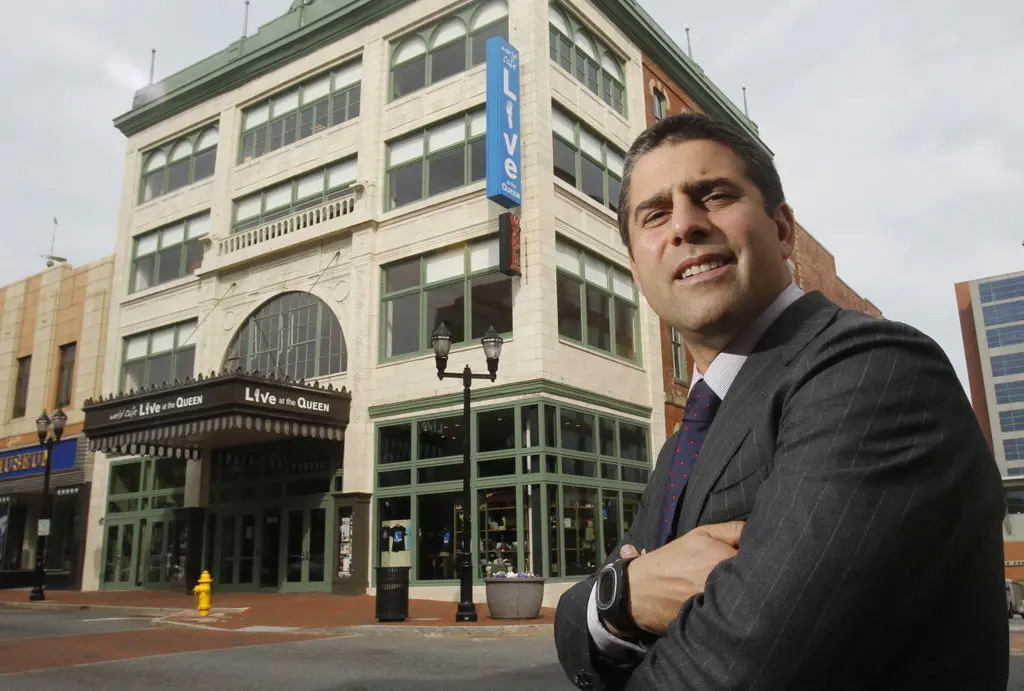
WILMINGTON, Del. — A recent Saturday gathering of children eating peanut butter and jelly sandwiches and bouncing to the beat of an African band in a renovated theater was a fitting symbol for the continuing efforts to revive the city’s Market Street corridor.
The lunchtime concert was in the once-grand Queen Theater, which had sat vacant for more than 50 years until a $25 million renovation brought it back to life in April as a restaurant and live-music space. The theater is considered the anchor of an ambitious public-private partnership to breathe new life into a nine-block stretch of Market Street that connects Wilmington’s thriving central business district and the Christina River’s redeveloped waterfront of office, residential and retail space.
Market Street was once Wilmington’s commercial hub, but shoppers fled to suburban malls long ago, and its conversion into a pedestrian mall in the 1970s never panned out. Its fortunes began to change when the city reopened the entire street to vehicles in 2007.
“When Market Street reopened, we saw the architecture and the opportunities and we bought 28 buildings,” said Chris Buccini, a managing partner of the Buccini/Pollin Group, a real estate development and management company that focuses on the mid-Atlantic region and has been the biggest player in Market Street’s makeover.
The architecture of the corridor’s two- to four-story buildings ranges from late-19th-century styles to Art Deco. Their bones were solid, but much of the upper floor space was vacant and neglected. Mr. Buccini’s company and other private developers, local businesses and foundations and city officials came together to create the Lower Market Design District, or LOMA, short for Lower Market. It now encompasses Market Street from the river up to Rodney Square, Wilmington’s epicenter. It also includes properties on adjacent King and Shipley streets.
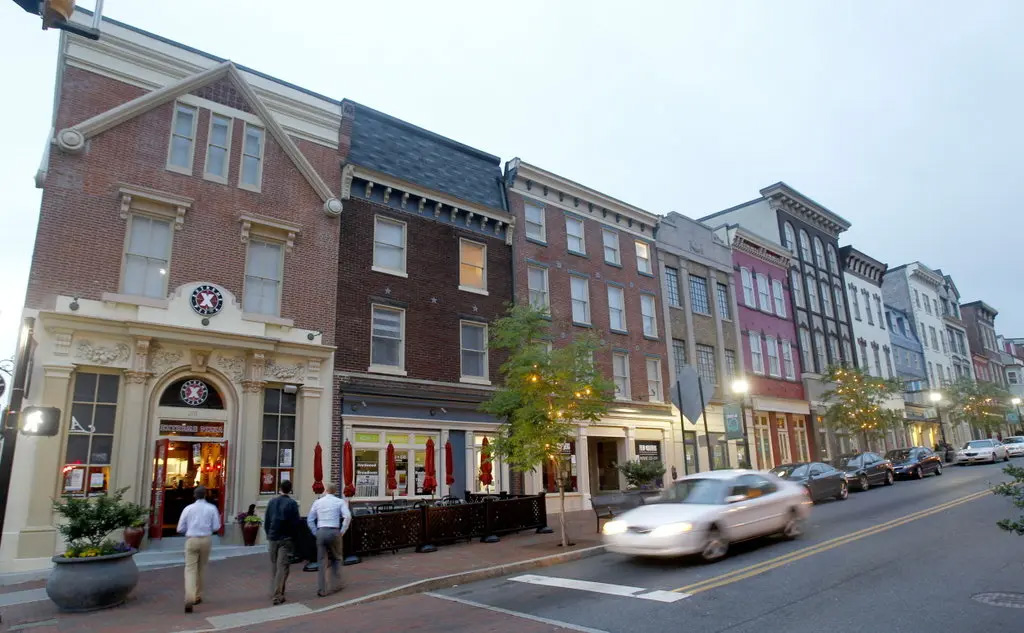
The LOMA district has several missions. One is to bring in boutiques and entertainment options, like bars and restaurants. Another is to attract the so-called creative class, including artists and small but growing software, design and marketing companies. And developers are converting the vacant upper floors into apartments, aimed mainly at the city’s young professionals.
At one of Mr. Buccini’s properties, on the 900 block of Market Street, a former office building has been converted into a Public House restaurant. He said rent in the upstairs apartments range from $900 for a studio to up to $2,400 for a two-bedroom unit, and that the units are almost fully leased.
As he walked along Market Street’s brick sidewalks and vintage street lamps, Mr. Buccini pointed to some of the corridor’s additions, including a tapas restaurant and some cutting-edge clothing stores. He stopped in front of one of his properties, an empty WSFS Financial bank branch, which he said he was in no rush to fill. “Honestly, we’re waiting for something cool to come in here,” he said. “Maybe do a ping pong/pool hall/bar kind of place.”
From a retail perspective, Mr. Buccini, a Wilmington native, said the goal was to fill the district with distinctive businesses to make it stand out from suburban shopping options. “We want local and regional players to create a more homegrown, folksy feel,” he said.
He said LOMA’s makeover would not have been possible without federal New Market Tax Credits and enormous help from the city. New Market Tax Credits is a Treasury Department program that promotes investment in low-income neighborhoods by providing tax credits equal to 39 percent of qualified investments in those communities. The credit is claimed over a seven-year period.
The city created the $15 million Upstairs Fund to provide loans to help developers and local businesses renovate LOMA buildings by sprucing up facades and bringing neglected buildings up to code.
“Government has to look at its historical building fabric as infrastructure, even though it’s privately owned,” said Jeff Flynn, Wilmington’s deputy director of economic development. “You can’t have blighted buildings and expect people to come into your city.”
Mr. Flynn said the city’s renovation fund contributed $3 million toward the project to convert the Queen Theater into a World Cafe Live venue. The original World Cafe Live in Philadelphia is a concert and dining facility that houses the studios of a popular adult alternative radio station, WXPN, and licenses the name of the station’s nationally syndicated World Cafe Live program.
It has been a huge success, and Wilmington officials and the Buccini/Pollin Group asked Hal Real, the president of Real Entertainment Group and the concept’s creator, to open a World Cafe Live on Market Street. It wasn’t his first choice for expansion, he said, but he soon embraced the opportunity. “A lot of people are looking at the Queen as the catalyst to bring Market Street back to life,” Mr. Real said.
The World Cafe Live at the Queen’s main music hall, with its mix of new construction and rustic remnants from the old theater, holds up to 800 people. A smaller hall can accommodate up to 250 people. Mr. Real said he expected the theater would host 350 to 400 events annually.
Mr. Flynn said that the Market Street corridor had attracted roughly $250 million in investments and that vacancy rates in renovated buildings were low. But he quickly added that LOMA remained a work in progress. “We measure success in decades,” he said.
Other people see success coming more quickly. “The LOMA area isn’t completely there yet, but it has vibrant potential,” said Don Meginley, the president of Preservation Initiatives. His firm specializes in adaptive reuse of historic properties, and has played a big role in renovating the lower end of Market Street. “I think we will see dramatic changes over the next 18 to 30 months. The Queen is so huge in this equation.”
 Hail Cinema Jams at the World Cafe